




Contents
- 1 A Country That’s Always Had a Complicated Relationship With Cannabis
- 2 The Medical Cannabis Turning Point
- 3 Younger Australians Are Leading the Cultural Shift
- 4 The Policy Landscape Is Slowly Catching Up
- 5 What the Research Actually Says
- 6 Culture Often Moves Faster Than Law
- 7 Where Does This Leave Us?
- 8 FAQs
A Country That’s Always Had a Complicated Relationship With Cannabis

Australia has never been a stranger to cannabis. Use has been relatively widespread for decades, particularly among younger adults. But for most of that time, the dominant attitude from governments, media, and large parts of the public was one of fairly firm disapproval.
That wasn’t unique to Australia, of course. Much of the English-speaking world shared that position. But something interesting has been happening over the past ten to fifteen years: the evidence base around cannabis has grown substantially, and with it, public understanding has become considerably more nuanced.
People are now far more likely to distinguish between, say, a teenager using cannabis recreationally and a middle-aged person using a prescribed cannabis oil to manage chronic pain. That distinction matters a great deal and it’s one that wasn’t really part of mainstream conversation a generation ago.
The Medical Cannabis Turning Point
If there’s one moment that genuinely moved the needle on Australian attitudes, it’s probably the legalisation of medicinal cannabis in 2016. That decision by the federal government didn’t just create a new medical pathway it reframed how many Australians thought about the plant entirely.
Suddenly, cannabis wasn’t only a recreational drug. It was also something a GP might discuss with a patient dealing with epilepsy, anxiety, chronic pain, or the side effects of chemotherapy. When something enters the medical system, it tends to lose some of its social stigma fairly quickly. People are pragmatic like that.
The numbers back this up. Prescriptions for medicinal cannabis in Australia have grown at a remarkable rate since 2016, with hundreds of thousands of approvals issued over the following years. That’s not a fringe phenomenon that’s a significant portion of the population, and their families, getting a very direct and personal experience with cannabis as medicine.
If you’re curious about how medicinal cannabis actually works in practice day-to-day, including something as specific as flying with medicinal cannabis in Australia, the rules and logistics are increasingly well-defined which itself signals just how normalised this area has become.
Younger Australians Are Leading the Cultural Shift
Generational change is doing a lot of heavy lifting here, too. Australians under 40 tend to hold considerably more relaxed views on cannabis than older cohorts not universally, but as a general pattern. This isn’t particularly surprising. Younger generations have grown up seeing cannabis policy reform succeed in places like Canada, parts of the United States, and various European countries without the sky falling in.
Seeing real-world examples of regulated cannabis markets functioning generating tax revenue, reducing black market activity, allowing for quality controls makes the abstract argument for reform feel a lot more concrete. It’s one thing to debate what might happen. It’s another to point at a country that’s already done it and say, “well, they seem okay.”
Social media has played a role too, perhaps more than people give it credit for. Cannabis content educational, cultural, and medical is widely shared online. That kind of ambient exposure normalises something that once felt taboo, especially for people who’ve never personally used it.
The Policy Landscape Is Slowly Catching Up

Australian politics tends to move carefully on anything cannabis-related, but there are real signs of momentum. The ACT (Australian Capital Territory) took a notable step in 2020 by decriminalising the personal possession and cultivation of small amounts of cannabis for adults. It wasn’t full legalisation, but it was a significant signal.
At the federal level, debates about broader reform have become more visible and less politically radioactive than they once were. Minor parties have long pushed for change, but increasingly, mainstream political figures are willing to engage with the question seriously even if they stop short of full endorsement.
Australia’s growing role in the global medicinal cannabis market has also shaped policy conversations in interesting ways. As the country has become more involved in cannabis imports and exports and how Australia regulates international trade, the economic dimension of cannabis policy has become impossible to ignore. When there’s money on the table and international relationships involved, governments tend to pay attention.
What the Research Actually Says
It’s worth pausing here to be honest about what science does and doesn’t tell us, because this is where conversations can get muddled pretty quickly.
-
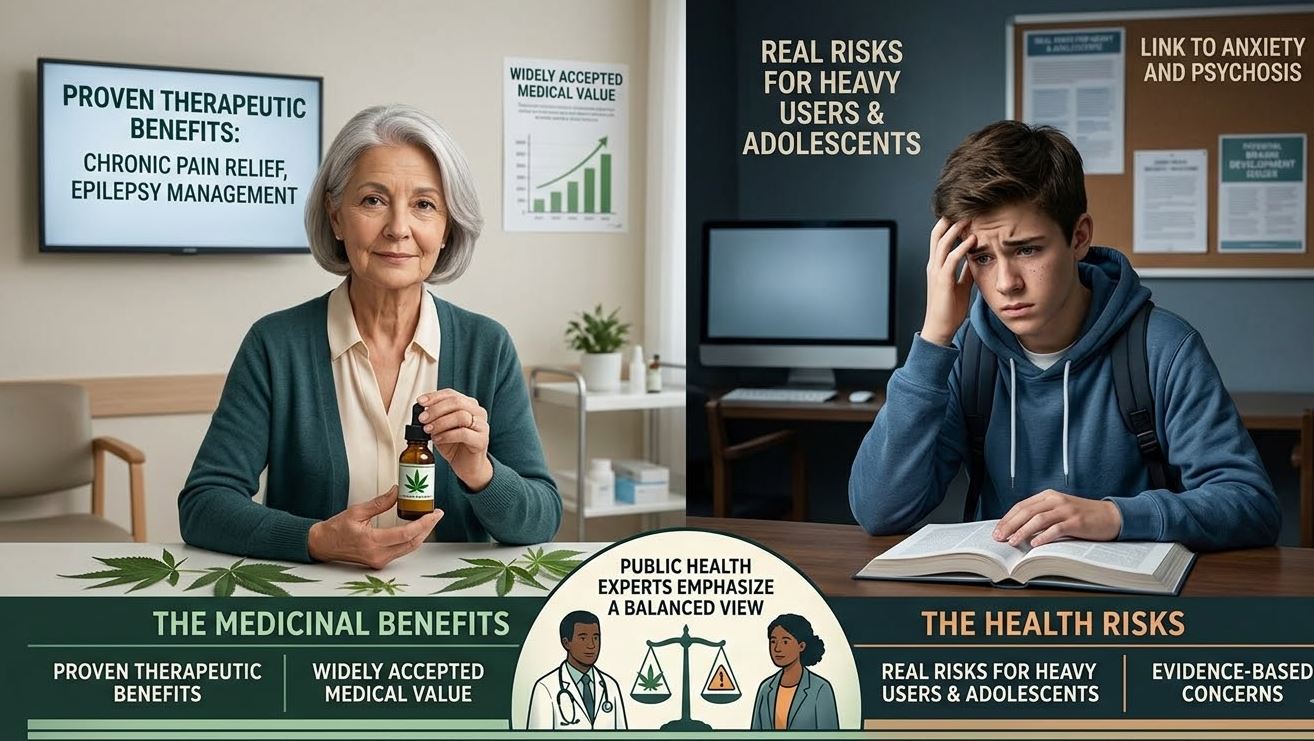
Research confirms that cannabis has proven therapeutic benefits for certain conditions, including chronic pain, epilepsy, and chemotherapy-related nausea.
-
The medical value of cannabis is now widely accepted in scientific literature.
-
Cannabis also carries real risks, especially for heavy users, adolescents, and people with mental health vulnerabilities.
-
Regular use among young people is linked to potential brain development issues and a higher risk of anxiety and psychosis.
-
These risks are evidence-based concerns, not just exaggerated warnings.
-
Public health experts emphasize a balanced view, acknowledging both benefits and harms.
-
There is a growing consensus that criminalisation may cause more harm than regulated use, particularly for adults.
-
This evidence-based perspective is gaining support in Australia and globally.
Culture Often Moves Faster Than Law
Here’s something worth noting: in most cases, cultural attitudes shift before laws do. That’s been true of a lot of social changes throughout history. People’s day-to-day behaviour and beliefs tend to evolve gradually, and policy eventually catches up sometimes slowly, sometimes in a rush.
With cannabis in Australia, you can see both happening simultaneously. Public opinion polls consistently show growing support for some form of reform, whether that’s full legalisation, decriminalisation, or at minimum expanding medicinal access. The political conversation is lagging a little behind, but it’s closing the gap.
What’s particularly interesting is that the change isn’t just happening among one demographic or one political tribe. Conservatives and progressives, older and younger Australians, urban and regional communities all of these groups contain growing numbers of people who’ve updated their views, often because of personal experience with medicinal cannabis, or simply because they’ve looked at the evidence and found the old arguments less convincing than they once did.
Where Does This Leave Us?
Australia isn’t Canada. Full recreational legalisation isn’t on the immediate horizon at a federal level. But the direction of travel is fairly clear, and the pace of change in medicine, in culture, and to some degree in policy has been faster than most people expected even a decade ago.
For more context on the broader cultural and legal landscape, the full picture of cannabis and Australian culture is rich, complicated, and genuinely worth understanding whether you’re a patient, a curious bystander, or just someone trying to make sense of a topic that’s suddenly everywhere.
FAQs
1. Is cannabis legal in Australia?
Cannabis laws in Australia vary by state and territory. While recreational use remains illegal in most areas, some regions have decriminalized possession in small amounts. Medical cannabis is legal with a prescription.
2. How have attitudes toward cannabis changed in Australia?
Public opinion has shifted significantly in recent years, with growing support for medical cannabis and increasing discussions around decriminalization and legalization.
3. What role does medical cannabis play in Australia today?
Medical cannabis is now widely accepted and prescribed for conditions such as chronic pain, anxiety, and epilepsy, contributing to a more positive perception of cannabis overall.
4. Is cannabis socially accepted in Australian culture?
While stigma still exists, especially among older generations, younger Australians tend to have more open and accepting views toward cannabis use.
5. Are there penalties for cannabis possession in Australia?
Penalties depend on the state or territory. Some regions issue fines or diversion programs for small amounts, while others still enforce stricter legal consequences.
